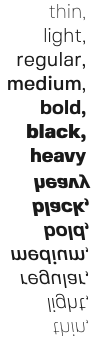
Typography plays a significant role in web design. Choose fonts that are legible and complement your brand's identity. Consider font pairings for headings and body text.
Ensure that your website is responsive, meaning it adapts to various screen sizes and devices, such as smartphones, tablets, and desktop computers. This is crucial for providing a seamless user experience.
Card-based design is popular for organizing and presenting content in an easily digestible format. Cards can be used for blog posts, product listings, or portfolio items.
Clear and intuitive navigation menus are essential for helping users find their way around your website. Common patterns include top navigation bars, side menus, or hamburger menus for mobile devices.
Subtle animations as users scroll down the page can add a touch of interactivity and engagement. These animations can include fade-ins, parallax effects, or content reveal.
A hero section is the large, prominent area at the top of a webpage that often includes a headline, subheadline, and a call to action. It's a key focal point for grabbing users' attention.